
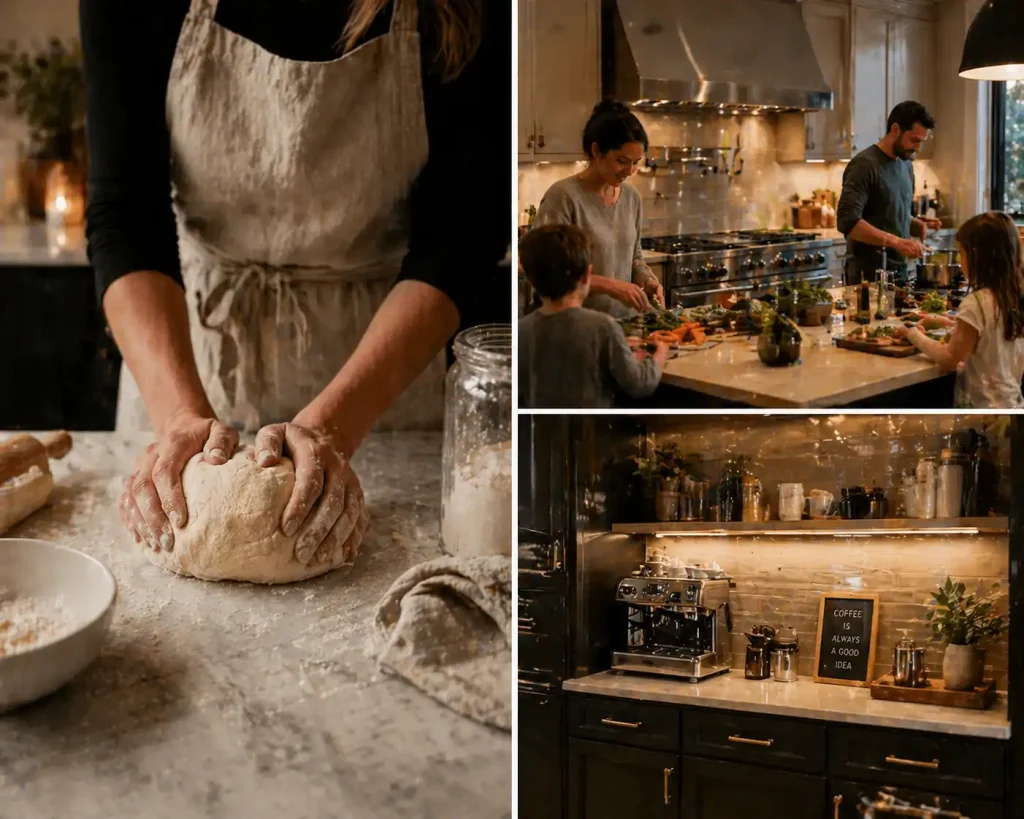
Most kitchen designs start with the wrong question. Designers ask what color cabinets you want and what countertop you like. The right first question is how you actually cook. Not how you wish you cooked. How you actually cook on a Tuesday at 6:45 p.m. Picking the right kitchen layout for your Columbus home starts there.
A kitchen designed around real cooking habits saves you money, time, and frustration for the next decade. Here is how to figure out your style and what to prioritize for each one.
The everyday family cook
You make dinner four to six nights a week. Mostly stovetop and oven, sometimes the slow cooker, occasional baking. Pasta, sheet-pan dinners, roasted chicken, pan-seared fish, the rotation of about 20 recipes you know by heart.
Spend on a 36-inch range or cooktop instead of the standard 30-inch. The extra burner real estate matters when you have two pans going. Build in a real prep zone next to the stove with at least 24 inches of uninterrupted counter on the side you actually work from. If you are right-handed, that means counter to the right of the cooktop.
A deep single-bowl sink in the 30-inch range handles every roasting pan you own. Add a pull-out trash and recycling next to the prep area, not across the kitchen. You take three steps to throw out scraps a hundred times a year. Use cabinet drawers and pull-outs for most lower storage so everything stays within reach without crawling.
The entertainer and host
You cook for 8 to 20 people regularly. Holidays at your place. Friends over for dinner parties. The kitchen is your stage, not just a workspace.
Build in a second sink, ideally on an island, so guests can grab water and rinse glasses without crowding your prep area. Plan a 48-inch range, or a 36-inch range with a separate wall oven. You will use both ovens during a holiday meal. A beverage center or undercounter wine fridge stocked outside the main work zone keeps guests from blocking your traffic path. Modern kitchen island design ideas can show how to layer a prep sink, seating, and storage into one piece.
Seating for four to six on the island matters more than people realize. Bar stools, a clean overhang, no awkward corners. Get the right spacing between the island and counter and traffic flows during a party instead of bottlenecking at the fridge. Two dishwashers, if budget allows, sounds extreme until you live through your first dinner for sixteen.
The serious baker
You bake weekly. Sourdough, layered cakes, cookies, pies, bread. Flour ends up on every surface twice a month.
Carve out a dedicated cool stone or marble surface for rolling dough. Even a 24-inch section of counter helps, and marble beats quartz here because it stays cooler. A second oven, ideally a wall oven with true convection and a steam option, takes you from one-recipe baking to layered holiday menus. A pull-out stand mixer shelf inside a base cabinet is a quiet game-changer. The mixer weighs 25 pounds. Lifting it onto the counter every time stops being charming after the third week. The same logic applies to hiding everyday appliances in your kitchen so the counter stays workable.
Build dedicated baking storage. A tall cabinet for cookie sheets and cooling racks stored vertically. Wide drawers for bowls and measuring cups. Strong task lighting on the prep zone. Real bakers measure by weight, so leave a clean spot for the scale and a faucet nearby for the constant hand-washing.
The meal prepper
You batch-cook for the week on Sunday. Two hours of intense work, then containers in the fridge for five days.
Plan a massive cutting and prep zone, 36 to 48 inches of counter dedicated to chopping, with a knife rail or magnetic strip nearby. Multiple cutting boards stored vertically inside a cabinet, not stacked on top of each other. A deep drawer of food storage containers organized so you can grab what you need fast. Glass containers with stackable lids beat the random Tupperware drawer chaos every time.
A second fridge or a separate freezer is almost a requirement. Often a basement chest freezer or a column refrigerator. You are storing a week of meals plus normal groceries. A pot filler over the cooktop saves repeated trips with heavy water if you make a lot of pasta or stock. Strong task lighting matters because you will be doing precise knife work for two hours straight.
The takeout-and-reheat household
Honest version. You order in three or four nights a week. The kitchen makes coffee, reheats leftovers, and handles light cooking on weekends.
Build a small but well-laid-out coffee bar with a built-in spot for the espresso machine, the grinder, and storage for beans and mugs. A drawer microwave or a dedicated reheat zone you can access without crowding the cooktop matters more than a fancy range. A small but high-quality cooktop is honestly enough. Two burners covers most of what you actually do.
Skip the second oven and the 48-inch range. You are not using them. Get a bigger fridge with takeout container space because you have more leftovers than groceries. Save the kitchen budget for finishes and a beautiful island. Your kitchen is your social space more than your cooking space, and the design should reflect that honestly.
The hobbyist cook
Sourdough, pasta-making, smoking, fermenting, charcuterie. You go deep on one or two specific things and the kitchen needs to support that obsession.
Build dedicated storage and counter for the equipment of your hobby. Sourdough bakers need bench space and proofing room. Pasta makers need a clamping spot for the machine. Smokers need outdoor work zones. A wine fridge or beverage center for fermenting and curing matters because some hobbies need 55-degree storage that a normal fridge cannot provide. This is where custom kitchens in Columbus pay back the upcharge: hobby workflows do not fit standard cabinet sizes.
Strong ventilation matters because some hobbies smell. Real CFM ratings on the range hood, not the marketing number. A second sink in the prep zone for hands-on hobby work that does not stop the rest of the kitchen from running. The serious cook with a focused hobby is the most under-served homeowner in standard kitchen design, which is exactly why a custom approach pays back.
The honest gut check
Pick your style, then design backward from it. The kitchen that fits your real life feels good every day. The kitchen designed for a fantasy version of yourself feels disappointing within months.
Cook the way you actually cook on a Tuesday night, not the way you cook for the magazine spread that lives only in your head. Design for the real version. The Pinterest version is a distraction. The kitchen that supports how you already live is the one that pays back every day for the next ten years.