
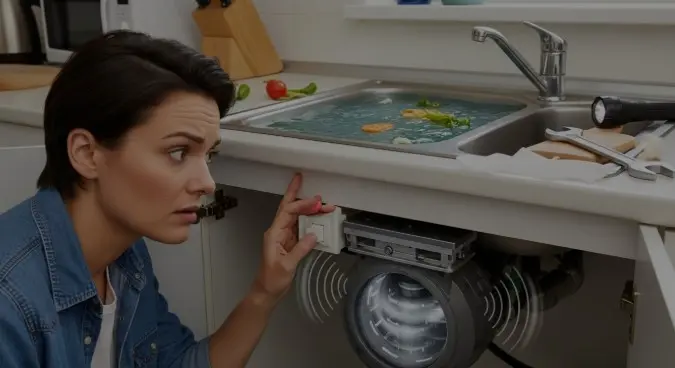
If you turn on your garbage disposal and hear it spinning normally but the sink fills with water instead of draining you’re dealing with one of the most common (and confusing) kitchen plumbing problems. The good news? In most cases, this issue is fixable without replacing the entire unit. Understanding why it’s happening is the key to choosing the right solution and avoiding costly mistakes.
This guide is written to be the most complete, practical explanation available, combining plumbing mechanics, real-world troubleshooting, and prevention advice all in one place.
Short Answer: Why is my garbage disposal just spinning but not draining?
In most cases, your garbage disposal is spinning but not draining because of a partial clog, a jammed impeller, or a blockage further down the drain line, not because the motor is broken. The unit can still spin while waste and water are trapped below it.
This problem rarely means the disposal motor is burned out it usually points to a drainage or obstruction issue that can be diagnosed step by step.
Understanding the Problem: What It Means When a Garbage Disposal Spins but Won’t Drain
To understand why this happens, it helps to know how a garbage disposal actually works.
A garbage disposal doesn’t “chew up” food like a blender. Instead, it uses spinning impeller plates to push food waste against a grinding ring, breaking it into small particles. Water then carries those particles out through the drain line.
Here’s the key distinction:
- Grinding action = mechanical spinning inside the unit
- Drainage = gravity + water flow through your plumbing
That’s why spinning does not equal draining. If anything blocks the path after the disposal, the unit can run perfectly while water backs up into the sink. The disposal and drain system work together when one fails, the other suffers.
Why Is My Garbage Disposal Just Spinning but Not Draining?
1. Partial Drain Clog Below the Disposal
Grease, soap residue, coffee grounds, rice, pasta, and fibrous foods often form a thick sludge just below the disposal outlet.
Why it causes backups:
The blades spin, but water can’t pass through the narrowed pipe, so it pools in the sink.
2. Jammed or Obstructed Impeller Plate
Small hard objects like bones, fruit pits, bottle caps, or utensils can lodge inside the disposal.
Why the motor still runs:
The motor may spin freely without effectively pushing waste downward, especially if the obstruction limits impeller movement.
3. Clogged P-Trap or Branch Drain
Many homeowners assume the clog is inside the disposal, but the P-trap (the curved pipe under the sink) is often the real culprit.
Signs the clog is downstream:
- Both sides of a double sink back up
- Water drains very slowly even when the disposal is off
4. Improper Installation or Plumbing Configuration
Even a brand-new disposal can have drainage issues if:
- The drain pipe slope is incorrect
- The dishwasher knockout plug wasn’t removed
- Venting is inadequate
Poor installation creates chronic slow-drain conditions that mimic clogs.
5. Failing or Worn Disposal Components
Over time, impellers dull, internal seals corrode, and grinding efficiency drops.
When spinning means replacement:
If the unit spins loudly, drains poorly despite clear pipes, and is over 8–10 years old, it may be nearing end-of-life.
Common Signs and Symptoms to Help Diagnose the Exact Issue
- Humming vs. spinning: Humming suggests a jam; spinning suggests a drainage issue
- Standing water: Likely a clog below the disposal
- Slow drainage: Partial blockage
- Gurgling or bubbling: Air trapped by a clog
- Dishwasher backing up: Shared drain line obstruction
Step-by-Step Guide: How to Fix a Garbage Disposal That Spins but Doesn’t Drain
Step 1: Turn Off Power and Check for Visible Obstructions
Safety first disconnect power at the switch or breaker.
Use a flashlight and tongs (never your hand) to check inside the disposal.
Tools: Hex key, flashlight, tongs
Step 2: Manually Rotate the Disposal Impeller
Most disposals have a hex socket underneath.
- Insert the Allen key and rotate back and forth
- Resistance indicates a jam
- Smooth movement suggests the clog is downstream
Why is my garbage disposal just spinning but not draining even after this step?
If rotation is smooth but drainage doesn’t improve, the blockage is almost certainly in the drain line or P-trap.
Step 3: Plunge the Sink Properly
Fill the sink with a few inches of water and plunge forcefully.
- Seal the overflow opening
- Use quick, strong plunges
Plunging works because it moves the clog, unlike chemical cleaners.
Step 4: Clean and Inspect the P-Trap
Place a bucket underneath and remove the curved pipe.
- Expect grease, sludge, and debris
- Clean thoroughly before reinstalling
This step alone resolves many drainage problems.
Step 5: Flush the Drain Line
Try:
- Hot water + dish soap (for grease)
- Ice cubes + salt (for internal cleaning, not clogs)
Avoid boiling water if grease is present it can worsen blockages.
Step 6: Test Drainage and Reset the Unit
Restore power and press the reset button if needed.
Signs of success: Water drains quickly, disposal runs quietly, no backups.
What NOT to Do When Your Garbage Disposal Isn’t Draining
- Use chemical drain cleaners (they damage seals and pipes)
- Press the reset button repeatedly
- Reach inside the unit by hand
- Pour boiling water into grease-heavy clogs
Comparison Table: Causes vs. Symptoms vs. Best Fix
| Issue Cause | What You’ll Notice | Drainage Speed | Best Fix |
|---|---|---|---|
| Partial clog | Spinning, standing water | Very slow | Plunge + P-trap clean |
| Jammed impeller | Spins but weak grinding | Poor | Manual rotation |
| P-trap blockage | Water backs up fast | None | Trap removal |
| Installation issue | Chronic problems | Inconsistent | Re-plumbing |
| Worn disposal | Loud spinning | Poor | Replacement |
When to Call a Plumber vs. When to DIY
DIY is safe when:
- The clog is in the P-trap
- The disposal resets normally
- No leaks or sewer odors
Call a plumber if:
- Multiple drains back up
- You suspect vent or sewer issues
- Water damage risk is present
Ignoring the issue can lead to cabinet damage and mold.
How to Prevent Your Garbage Disposal From Spinning Without Draining Again
- Avoid grease, coffee grounds, pasta, rice, and fibrous foods
- Run cold water during and after grinding
- Feed waste slowly
- Clean monthly with ice and citrus peels
Prevention is far cheaper than repair.
FAQs About Garbage Disposals That Spin but Don’t Drain
Why is my garbage disposal just spinning but not draining even after resetting it?
Because the reset only protects the motor it doesn’t clear clogs.
Can a garbage disposal spin if it’s clogged?
Yes. Spinning often means the clog is below the unit.
Is it safe to use Drano in a garbage disposal?
No. It can damage seals and corrode metal components.
Why does my sink fill with water when the disposal runs?
Because water can’t pass through a downstream blockage.
How do I know if the clog is past the disposal?
If plunging and manual rotation don’t help, it’s likely in the drain line.
Will replacing the disposal fix a drainage problem?
Only if the disposal itself is failing not if the drain is clogged.
How long should a garbage disposal last?
Typically 8–12 years with proper care.
Can a clogged vent cause disposal drainage issues?
Yes. Poor venting can slow or stop drainage entirely.
Conclusion: Fixing a Garbage Disposal That Spins but Won’t Drain
When your garbage disposal is spinning but not draining, the problem is almost never mysterious it’s mechanical and solvable. In most cases, the issue comes down to a clog, obstruction, or drainage restriction, not a failed motor.
By diagnosing the cause before replacing parts, you save money, avoid damage, and restore proper function quickly. Address the issue early, follow the steps carefully, and your disposal and plumbing will thank you. If the issue is still there you should consider replacing it with the help of The Kitchen Consultants.