
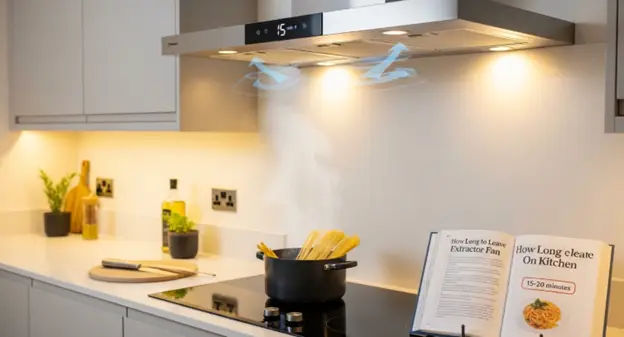
Cooking produces heat, steam, grease particles, and strong odors that can quickly fill a kitchen. Without proper ventilation, these pollutants linger in the air, settle on surfaces, and even spread to other rooms in the house. That’s where an extractor fan becomes essential.
However, many homeowners ask the same practical question: how long to leave extractor fan on kitchen after cooking? Running it too briefly leaves moisture and odors behind, while running it excessively wastes energy.
Understanding the right timing helps maintain clean air, reduce grease buildup, and keep your kitchen environment comfortable. In this guide, you’ll learn the recommended running time, factors that influence it, and expert-backed practices for using your extractor fan effectively.
Quick Answer — How Long Should You Leave an Extractor Fan On in the Kitchen?
In most kitchens, the recommended rule is to leave the extractor fan running for about 10–15 minutes after cooking. This allows the fan to remove lingering steam, smoke, and airborne grease particles that remain in the air even after the stove is turned off.
Ventilation specialists often recommend this timeframe because kitchen air pollutants continue circulating for several minutes after cooking ends. Turning the fan off immediately traps moisture and odors inside the kitchen.
Running the fan slightly longer helps clear the air completely and prevents humidity buildup that could lead to mold or grease residue on cabinets.
The Ideal Time to Run an Extractor Fan After Cooking
The commonly recommended 10–15 minute rule works well for most cooking situations. After you finish cooking, keep the extractor fan running long enough to clear the remaining air pollutants.
You may need to run it longer in situations such as:
- Frying foods that produce grease or smoke
- Cooking multiple dishes at once
- Using high heat methods like grilling or stir-frying
In these cases, 15–20 minutes is often more effective.
Shorter run times can work if you are only boiling water, reheating food, or doing very light cooking that produces minimal steam.
Why Knowing How Long to Leave Extractor Fan On Kitchen Matters
Many homeowners underestimate how much pollution cooking produces. Running the fan for the proper amount of time provides several benefits.
Moisture removal
Steam from boiling or simmering can raise humidity levels. Extractor fans help remove excess moisture before it condenses on walls or cabinets.
Odor control
Strong smells from spices, frying oil, or burnt food can linger for hours without ventilation.
Grease particle extraction
Cooking oils release tiny grease particles that stick to surfaces. Ventilation removes them before they accumulate.
Indoor air quality improvement
Cooking releases gases and fine particles. Proper ventilation helps keep indoor air cleaner and healthier.
Core Understanding Section
What Does a Kitchen Extractor Fan Actually Do?
An extractor fan is designed to remove polluted air from the cooking area and replace it with fresh air. According to The Kitchen Consultants, understanding how long to leave extractor fan on kitchen is just as important as installing the fan itself. It works by pulling air through filters and either venting it outside or recirculating it after filtration.
How Extractor Fans Remove Heat, Steam, and Cooking Odors
When the fan is running, it pulls hot air, smoke, grease particles, and steam away from the stovetop. The airflow prevents these contaminants from spreading throughout the home.
High-quality extractor fans use strong motors to move large volumes of air quickly, which helps clear the kitchen faster.
The Science Behind Kitchen Ventilation
Cooking releases microscopic particles and gases into the air. Without ventilation, these pollutants remain suspended and eventually settle on surfaces.
Extractor fans create airflow that captures these particles and directs them out of the kitchen. This process significantly reduces humidity and airborne grease.
Difference Between Venting and Recirculating Extractor Fans
There are two main types of kitchen extractor fans:
Vented (ducted) fans
These push air outside through ductwork. They are generally more effective at removing smoke and odors.
Recirculating (ductless) fans
These pass air through charcoal filters and return it to the kitchen. While convenient, they are slightly less effective than vented systems.
Factors That Determine How Long to Leave Extractor Fan On Kitchen
The ideal running time varies depending on several factors.
Type of Cooking (Frying vs Boiling vs Baking)
Cooking methods that produce smoke or grease require longer ventilation. Frying or grilling releases more particles than boiling or steaming.
Kitchen Size and Layout
Larger kitchens may require longer fan operation to fully clear the air. Open layouts can also allow odors to spread more easily.
Extractor Fan Power (CFM Rating)
Fans are rated in CFM (cubic feet per minute). Higher CFM means the fan moves more air and can clear the kitchen faster.
Ducted vs Ductless Extractor Fans
Ducted fans remove air from the home completely, while ductless systems rely on filtration. Recirculating systems may require longer running times.
Humidity Levels in the Kitchen
If your kitchen becomes very humid during cooking, the fan should run longer to remove moisture.
Duration of Cooking Time
Long cooking sessions produce more steam and odors, requiring additional ventilation time afterward.
Practical Implementation
How Long to Leave Extractor Fan On Kitchen for Best Results
Step 1 – Turn the Fan On Before Cooking
Start the fan a minute or two before you begin cooking. This creates airflow that captures smoke and steam immediately.
Step 2 – Keep It Running During Cooking
Allow the fan to run throughout the cooking process. This continuously removes airborne particles as they are produced.
Step 3 – Continue Running the Fan After Cooking
After you finish cooking, keep the fan running for 10–15 minutes to remove lingering pollutants.
Step 4 – Adjust Time Based on Cooking Type
Heavy cooking like frying or grilling may require 15–20 minutes of post-cooking ventilation.
Step 5 – Use Timer or Auto Shut-Off Features
Many modern extractor fans include timers or automatic shut-off functions that make it easy to maintain proper ventilation.
Recommended Extractor Fan Running Time Based on Cooking Activity
| Cooking Activity | Smoke/Steam Level | Recommended Fan Time | Reason |
| Boiling or simmering | Low | 5–10 minutes | Minimal moisture |
| Light cooking | Medium | 10–15 minutes | Removes steam and odors |
| Frying or grilling | High | 15–20 minutes | Grease particles and smoke |
| Heavy cooking sessions | Very High | 20–30 minutes | Prevents lingering smells |
| Baking | Low | 5–10 minutes | Heat removal |
Common Mistakes When Using a Kitchen Extractor Fan
Turning the Fan Off Immediately After Cooking
Many people turn the fan off as soon as cooking ends. This traps moisture and odors inside the kitchen.
Running the Fan Only After Smoke Appears
Waiting until smoke becomes visible reduces the fan’s effectiveness. Ventilation should begin before cooking starts.
Using the Wrong Fan Speed
Low speed may not remove heavy smoke effectively. High-heat cooking often requires a higher setting.
Not Cleaning the Extractor Fan Filters
Grease buildup blocks airflow and reduces performance.
Blocking Airflow with Cabinets or Decor
Improper installation or obstruction can prevent the fan from pulling air effectively.
How to Use Your Kitchen Extractor Fan More Efficiently
Start the Fan Before Cooking Begins
This captures pollutants immediately.
Use Higher Speed for Frying and Grilling
High heat methods produce more smoke and grease.
Keep Kitchen Doors or Windows Slightly Open
This allows fresh air to replace the air being removed.
Install a Timer Switch for Automatic Shutoff
Timers ensure the fan runs long enough without wasting energy.
Maintain Filters for Maximum Airflow
Clean filters allow the fan to operate at full capacity.
Benefits of Running an Extractor Fan for the Right Amount of Time
Prevents Grease Buildup in the Kitchen
Proper ventilation reduces sticky grease residue on cabinets and walls.
Reduces Indoor Air Pollution
Cooking can release pollutants such as nitrogen dioxide and fine particles.
Prevents Mold and Excess Humidity
Removing steam quickly prevents condensation that can lead to mold growth.
Keeps Kitchen Smelling Fresh
Lingering cooking odors are removed more effectively.
Improves Overall Home Ventilation
Extractor fans help maintain balanced airflow in the home.
How Long to Leave Extractor Fan On Kitchen — Related Questions
Should You Leave the Extractor Fan On After Cooking?
Yes. Running the fan for 10–15 minutes after cooking removes lingering steam and odors that remain in the air.
Can You Leave a Kitchen Extractor Fan On All Night?
Technically yes, but it is unnecessary for normal cooking situations and may waste energy.
How Long Should a Range Hood Stay On After Cooking?
Most ventilation experts recommend 10–20 minutes, depending on the cooking intensity.
Do Extractor Fans Remove Smoke Completely?
High-quality extractor fans remove most smoke and particles, but extremely heavy smoke may still linger briefly.
Does Running an Extractor Fan Save Energy Compared to Opening Windows?
Extractor fans are more efficient at targeted ventilation because they remove polluted air directly from the cooking area.
Should You Run the Extractor Fan While Boiling Water?
Yes, especially if steam levels are high. Even simple boiling increases humidity in the kitchen.
Is It Bad to Leave the Extractor Fan On Too Long?
Not usually, but excessive operation may waste electricity and wear out the motor over time.
Do Modern Extractor Fans Turn Off Automatically?
Many modern models include timer or automatic shut-off features that turn the fan off after a preset period.
Maintenance Tips That Affect How Long You Should Run an Extractor Fan
Cleaning Grease Filters
Grease filters should be cleaned every few weeks depending on usage.
Checking Airflow Performance
If the fan seems weak, check for blocked filters or ducts.
Inspecting Ductwork for Blockages
Bird nests, debris, or grease buildup can reduce airflow.
Replacing Carbon Filters in Recirculating Fans
Charcoal filters lose effectiveness over time and should be replaced regularly.
What Ventilation Experts Recommend for Kitchen Extractor Fan Usage
Standard Ventilation Guidelines for Residential Kitchens
Experts generally recommend extractor fans with sufficient CFM ratings and a 10–15 minute post-cooking run time.
How Professional Kitchens Handle Ventilation
Commercial kitchens use powerful ventilation systems that operate continuously while cooking.
When You Should Upgrade Your Extractor Fan
If your kitchen frequently smells of grease or smoke, your current fan may not have sufficient power.
FAQs About How Long to Leave Extractor Fan On Kitchen
How long should you run an extractor fan after cooking?
Typically 10–15 minutes after cooking is sufficient for most kitchens.
Should the extractor fan run while cooking or only afterward?
It should run both during and after cooking for the best ventilation.
Can leaving the extractor fan on reduce kitchen humidity?
Yes. Running the fan removes steam and helps control humidity levels.
How do you know if your extractor fan is strong enough?
If odors linger for long periods or grease builds up quickly, the fan may be underpowered.
Does an extractor fan remove cooking smells completely?
Most odors are removed, though very strong smells may take longer to clear.
Should the extractor fan be on high or low speed?
Low speed works for light cooking, while high speed is better for frying or grilling.
How often should extractor fan filters be cleaned?
Grease filters should typically be cleaned every 1–3 months depending on use.
Are ductless extractor fans less effective?
Yes, ductless systems are convenient but usually less powerful than ducted ventilation.
Final Thoughts on How Long to Leave Extractor Fan On Kitchen
Knowing how long to leave extractor fan on kitchen can make a significant difference in air quality and kitchen cleanliness. In most cases, running the fan 10–15 minutes after cooking is enough to remove lingering steam, odors, and grease particles.
For heavier cooking methods like frying or grilling, extending the run time to 15–20 minutes ensures the air is fully cleared. During a Kitchen Remodeling project, installing a high-quality extractor fan and understanding how long to leave extractor fan on kitchen can significantly improve ventilation and indoor air quality. By using the fan consistently, cleaning its filters, and adjusting its operation based on cooking intensity, you can maintain a fresher, healthier kitchen environment every day.