
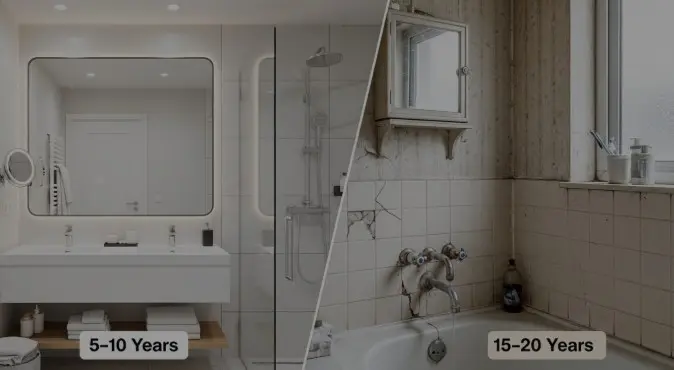
One of the most common questions homeowners ask contractors is, how often should you remodel your bathroom? Unlike other rooms in the home, bathrooms endure constant exposure to moisture, temperature changes, and daily wear. Over time, outdated fixtures, failing plumbing, and worn surfaces don’t just affect appearance they impact comfort, safety, and home value.
Bathrooms also evolve faster than many other spaces. Design trends shift, water-efficient technologies improve, and accessibility needs change as families grow or age. What once felt modern can look outdated in less than a decade. That’s why understanding the right bathroom remodeling timeline is critical for long-term planning.
In this guide, we’ll break down how frequently you should renovate your bathroom, the warning signs that signal it’s time for an upgrade, how trends influence remodeling decisions, and how to budget wisely. We’ll also explore strategies to maximize your bathroom renovation ROI so your investment adds real value to your home. Insights are based on industry standards, contractor experience, and homeowner renovation data to ensure accuracy and trust.
How Often Should You Remodel Your Bathroom?
So, how often should you remodel your bathroom? Most industry professionals agree that the average bathroom renovation frequency falls between 10 and 15 years. However, this depends heavily on how the bathroom is used, the quality of materials, and whether updates are cosmetic or structural.
Cosmetic bathroom updates such as new paint, lighting, mirrors, or fixtures are typically needed every 5 to 7 years. These refreshes keep the space modern without requiring a full renovation. On the other hand, a complete remodel involving plumbing, flooring, tile, and layout changes can last 10 to 20 years when done properly.
Several factors influence your bathroom’s lifespan:
- Usage: A primary bathroom wears out faster than a guest bath.
- Material quality: Builder-grade materials degrade sooner than premium finishes.
- Moisture exposure: Poor ventilation accelerates damage.
- Plumbing age: Older pipes often dictate renovation timing.
According to licensed remodeling contractors, delaying necessary upgrades often leads to higher costs later. Addressing problems early keeps your bathroom remodeling cost manageable while extending the bathroom’s functional life.
Top Bathroom Renovation Trends That Influence Remodeling Frequency
Bathroom trends play a major role in determining when to remodel your bathroom. Even well-maintained bathrooms can feel outdated when new innovations become standard.
One of the most influential trends is the shift toward walk-in showers with frameless glass, replacing traditional tubs. Homeowners also prioritize water-efficient fixtures, driven by sustainability concerns and rising utility costs. These upgrades often motivate remodeling sooner than planned.
Smart bathroom technology such as touchless faucets, heated floors, and smart mirrors has moved from luxury to expectation in many homes. Modern vanities with built-in storage address clutter and improve daily functionality, while aging-in-place designs like curbless showers and grab bars allow homeowners to stay in their homes longer.
As modern bathroom design evolves, homeowners frequently update spaces to match current standards. This shortens the traditional bathroom remodeling timeline, especially in competitive real estate markets where outdated bathrooms can reduce buyer interest.
Step-by-Step Guide: Deciding When to Remodel Your Bathroom
Determining the right time to remodel doesn’t have to be complicated. Follow this step-by-step approach to make a confident decision.
Step 1: Evaluate Age and Condition
If your bathroom is over 10 years old, inspect flooring, grout, fixtures, and plumbing. Visible wear often indicates deeper issues.
Step 2: Identify Functional Problems
Leaky faucets, mold, cracked tiles, or insufficient storage are clear signs you need a bathroom remodel. These issues rarely resolve on their own.
Step 3: Compare Repair vs. Remodel Costs
Repeated repairs add up. When repair expenses approach 30–40% of a full remodel, renovation becomes the smarter option.
Step 4: Assess Lifestyle Changes
Growing families, accessibility needs, or remote work can change how you use your bathroom. Remodeling ensures the space fits your lifestyle.
Step 5: Align With Home Value Goals
If you plan to sell within a few years, updating the bathroom can significantly improve market appeal and increase home value bathroom remodel returns.
Decision Checklist:
- Bathroom age exceeds 10 years
- Frequent repairs
- Outdated layout or design
- Moisture or ventilation issues
- Planned home sale
Common Bathroom Remodel Mistakes to Avoid
Mistiming a renovation is one of the most expensive mistakes homeowners make.
Remodeling too late often means structural water damage, mold growth, and subfloor replacement all of which inflate the bathroom remodeling cost. Another mistake is prioritizing style over durability. Trendy finishes that aren’t moisture-resistant age poorly.
Many homeowners also underestimate costs by skipping proper planning. Ventilation is frequently overlooked, leading to long-term humidity damage. Finally, hiring unlicensed contractors can void warranties and create compliance issues.
Avoiding these mistakes ensures your bathroom renovation frequency aligns with both performance and budget rather than emergency repairs.
Maximizing ROI When Remodeling Your Bathroom
A bathroom remodel consistently ranks among the top home improvements for return on investment. The average bathroom renovation ROI ranges between 60% and 70%, with mid-range remodels often outperforming luxury upgrades.
High-ROI features include:
- Updated, water-efficient fixtures
- Energy-efficient lighting
- Neutral tile and color palettes
- Improved ventilation
Remodeling before severe deterioration preserves value and minimizes surprise costs. While luxury features appeal to some buyers, universally functional upgrades deliver the best returns.
Choosing the right scope ensures your bathroom remodel boosts comfort today while strengthening resale value tomorrow.
Low-Cost Bathroom Updates vs High-End Bathroom Remodels
| Feature | Low-Cost Updates | High-End Remodel |
|---|---|---|
| Cost Range | $3,000–$8,000 | $20,000+ |
| Timeline | 1–2 weeks | 4–8 weeks |
| ROI | Moderate | High (if strategic) |
| Remodel Frequency | 5–7 years | 10–15 years |
FAQ: How Often Should You Remodel Your Bathroom?
How often should you remodel your bathroom in an older home?
Older homes often require bathroom remodels every 8–12 years due to aging plumbing and ventilation systems.
Can I remodel a bathroom every 5 years?
Yes, but typically for cosmetic reasons. Structural remodels aren’t necessary that often unless issues exist.
Does remodeling too often hurt home value?
Over-customization can reduce appeal, but strategic updates generally enhance value.
What’s the cheapest way to update a bathroom without a full remodel?
Fixture replacement, paint, lighting upgrades, and vanity refacing offer affordable refreshes.
Is a bathroom remodel worth it before selling a house?
Yes. Updated bathrooms attract buyers and can significantly improve resale price.
Conclusion
Understanding how often should you remodel your bathroom helps you plan smarter, avoid costly repairs, and protect your home’s value. Most homeowners benefit from cosmetic updates every 5–7 years and full remodels every 10–15 years, depending on usage and materials.
Proactive remodeling improves comfort, safety, and resale potential especially when guided by professional insight. If your bathroom shows signs of aging or no longer fits your lifestyle, now may be the right time to act.
Schedule a bathroom remodeling consultation today