
Kitchen remodels in Columbus, OH are increasingly including smart technology as a standard part of the planning process. It’s not just about having the latest gadgets. It’s about making your kitchen more efficient, easier to use, and better suited to how you actually cook and live.
If you’re already investing in a kitchen remodel, building in smart features from the start is a lot easier (and more cost-effective) than trying to retrofit them later. Here’s a look at some of the most practical ways to incorporate smart technology into your kitchen remodel.
Smart Appliances That Earn Their Keep
Not all smart appliances are created equal. Some features are genuinely useful, while others are just gimmicks that you’ll forget about after a week. Focus on appliances that solve real problems in your daily routine.
Refrigerators
Smart refrigerators can track expiration dates, create shopping lists, and let you see what’s inside from your phone while you’re at the grocery store. Some models include temperature management zones that adjust automatically based on what you’re storing. For Columbus families who do a lot of meal prepping, these features can cut down on food waste and make weekly shopping trips more organized.
Ovens & Ranges
Smart ovens allow you to preheat from your phone, monitor cooking progress remotely, and receive alerts when your food is done. Some models include built-in cameras so you can check on a roast without opening the door and losing heat. Induction cooktops with smart controls offer precise temperature adjustments and can sync with recipe apps for guided cooking.
Dishwashers
Smart dishwashers let you start cycles remotely and send notifications when a load is finished. They can also monitor water and energy usage, which helps keep utility costs down. Some models auto-select the right cycle based on how full the dishwasher is and how dirty the dishes are.
Lighting Controls & Automation
Smart lighting is one of the easiest and most impactful upgrades you can make during a kitchen remodel. Smart switches and bulbs let you control brightness and color temperature with your phone, a voice assistant, or preset schedules.
You can set your kitchen lights to turn on automatically when you walk in, dim in the evening, or shift to a cooler tone during cooking for better visibility. Motion-sensor under-cabinet lighting is also a practical addition that provides task lighting exactly when you need it. During Columbus winters, when natural light fades early, having a smart lighting setup makes the kitchen more comfortable to work in after dark.
Voice Assistants & Kitchen Hubs
A voice assistant like Amazon Alexa or Google Assistant can be a hands-free helper in the kitchen. Setting timers, converting measurements, adding items to a shopping list, and playing music while you cook are all things you can do without touching your phone or a screen.
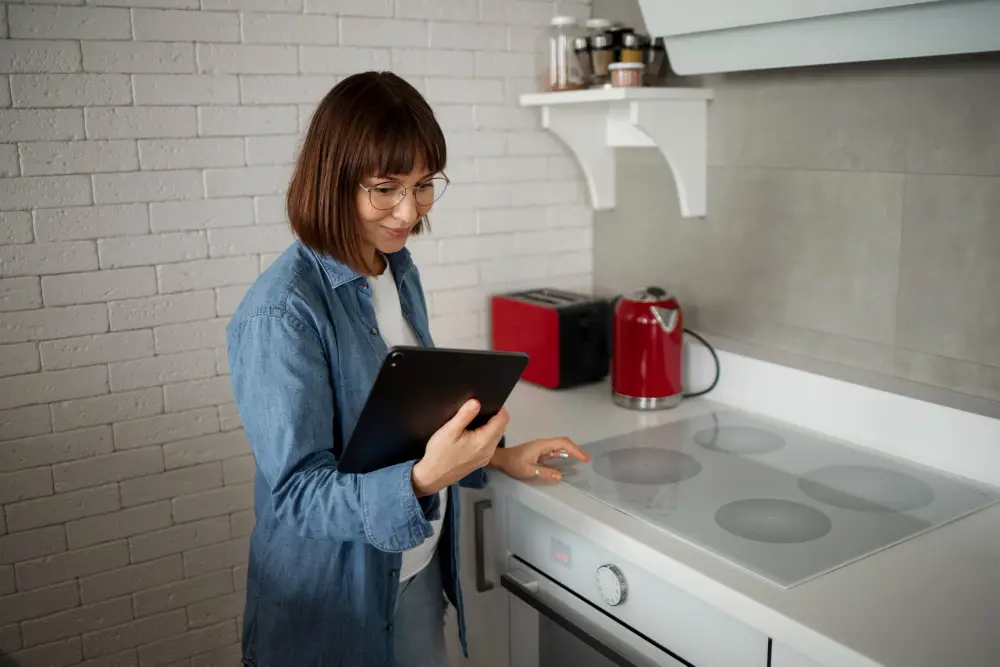
For families, a kitchen hub (like a wall-mounted tablet or a smart display) can serve as a centralized control panel for the household. You can use it to pull up recipes, manage family calendars, control smart devices, and even video call while you’re cooking dinner. Building in a dedicated spot for this during the remodel (with a recessed outlet and mounting bracket) keeps things clean and intentional.
Smart Faucets & Water Management
Touchless faucets have been around for a while, but the newer models offer more precision and additional features. Some allow you to dispense an exact amount of water by voice command, which is helpful for cooking and baking. Others include built-in water filtration and temperature memory, so you get your preferred setting every time.
Smart leak detectors placed under the sink can alert you to slow drips before they become a bigger problem. In older Columbus homes where plumbing may have some years on it, this kind of early warning can save you from water damage and costly repairs.
Electrical Planning for Smart Kitchens
One of the biggest mistakes people make is not planning enough electrical capacity for their smart kitchen setup. Smart appliances, USB charging ports, and connected devices all need power. During the remodel, work with your electrician to add dedicated circuits where needed and place outlets in locations that support your tech without visible cords running everywhere.
In-drawer outlets are a newer option that keep charging cables hidden inside a drawer. Pop-up outlets on the island give you access to power when you need it without cluttering the countertop. These kinds of details are much easier to include during the remodel than to add after the fact.
Wi-Fi & Connectivity
All of these smart features depend on a reliable Wi-Fi connection. If your kitchen is far from your router, or if you live in an older Columbus home with thick walls, you may need to add a mesh Wi-Fi node or a dedicated access point in or near the kitchen. Factoring this into your remodel plan ensures everything stays connected and responsive.
Start With What Solves a Problem
It’s tempting to go all-in on smart technology, but the most effective approach is to start with the features that address specific pain points. If you forget about leftovers in the fridge, a smart fridge with tracking makes sense. If you’re always cooking in dim lighting, smart lighting should be a priority. Build your tech plan around how you live, not around what’s trending.
Incorporating smart technology into your kitchen remodel in Columbus doesn’t have to be complicated or overly expensive. When you plan ahead and integrate these features during the build-out, they feel like a natural part of the kitchen rather than an afterthought. And they’ll make your daily routine noticeably easier.