
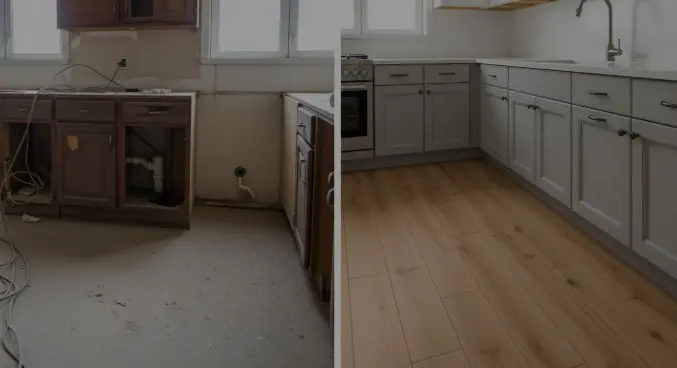
Deciding whether to install LVT flooring before or after kitchen cabinets is one of the most important sequencing choices in a kitchen remodel or new build. Get it right, and your floor lasts decades with zero issues. Get it wrong, and you risk buckling planks, voided warranties, costly tear-outs, and long-term structural problems. This guide delivers the most complete, manufacturer-aligned, professional-grade answer available so you can make the correct decision with confidence.
Short Answer — Should You Install LVT Flooring Before or After Kitchen Cabinets?
In most cases, LVT flooring should be installed after kitchen cabinets especially if you’re using floating (click-lock) LVT. Floating floors must be free to expand and contract, and cabinets restrict that movement. The main exception is glue-down LVT, which is often installed before cabinets when full-floor coverage is required.
Timing matters because it directly affects floor movement, long-term durability, finish quality, and manufacturer warranty compliance.
What “lvt flooring before or after kitchen” Really Means in Practice
When homeowners ask about lvt flooring before or after kitchen, they’re really asking whether the flooring should run underneath the cabinets or be installed around them.
- Installing LVT before cabinets means the floor runs wall-to-wall, and cabinets sit on top of it.
- Installing LVT after cabinets means cabinets are anchored to the subfloor, and LVT is cut neatly around toe kicks and cabinet bases.
Manufacturers and professional installers are very clear: floating LVT is not designed to support permanent, heavy fixtures. Cabinets pin the floor in place, preventing normal movement and leading to failures that often don’t show up until months later. This is why incorrect sequencing is one of the most expensive flooring mistakes homeowners make.
Key Factors That Decide LVT Flooring Before or After Kitchen Installation
Type of LVT Flooring Being Installed
Not all LVT behaves the same:
- Floating (click-lock) LVT: Must never be trapped under cabinets. It relies on expansion gaps to move as temperatures and humidity change.
- Glue-down LVT: Fully bonded to the subfloor, allowing cabinets to be installed on top without restricting movement.
- Rigid core vs flexible LVT: Rigid core products are even more sensitive to pressure points and movement restrictions.
This factor alone determines the correct answer in most homes.
Cabinet Style and Installation Method
Cabinet design also affects sequencing:
- Base cabinets: Typically fixed directly to the subfloor ideal for installing LVT after cabinets.
- Kitchen islands: Concentrated weight in one area makes floating LVT underneath especially risky.
- Fixed vs adjustable legs: Adjustable systems may distribute weight unevenly, increasing stress on LVT joints.
Heavy, immovable cabinetry and floating floors simply do not mix.
Subfloor Condition and Preparation Timing
Both cabinets and LVT require a properly prepared subfloor:
- Subfloors must be flat, level, and dry
- Moisture testing is essential before LVT installation
- Installing cabinets first allows aggressive leveling without risking finished flooring damage
This sequencing improves overall build quality and reduces callbacks.
Expansion Gaps, Movement, and Warranty Implications
Most LVT manufacturers require:
- Perimeter expansion gaps
- No fixed objects pinning the floor
- Freedom of movement across the entire floor plane
Installing cabinets over floating LVT violates these rules and often voids the warranty immediately, regardless of workmanship.
lvt flooring before or after kitchen — What Professionals Recommend
When Installing LVT Flooring Before Kitchen Cabinets Is the Right Choice
Installing LVT before cabinets can make sense when:
- You’re using glue-down LVT
- Full-floor continuity is required for commercial or design reasons
- You want easier future layout changes without visible floor gaps
Because the flooring is bonded, movement isn’t restricted by cabinetry.
When Installing LVT Flooring After Kitchen Cabinets Is the Better Option
This is the recommended approach for floating LVT, and the most common professional practice.
Benefits include:
- Proper expansion and contraction
- Lower material costs (you don’t pay for flooring hidden under cabinets)
- Reduced risk of buckling, joint separation, or edge lifting
For click-lock LVT, this method protects both the floor and your investment.
Common Contractor vs Manufacturer Disagreements (And Who to Trust)
Some contractors install LVT under cabinets out of habit or convenience. However:
- Manufacturer instructions override installer preference
- Written installation guidelines protect you, not the contractor
- Always request the product’s official installation manual
If a failure occurs, manufacturers rely on documentation not verbal advice.
Step 2 — Review Manufacturer Installation Guidelines
Search “[Brand Name] LVT installation instructions.” Look for language about:
- Fixed objects
- Cabinet installation
- Expansion requirements
Step 3 — Evaluate Cabinet Layout and Load Points
Pay close attention to:
- Islands
- Appliance garages
- Pantry walls
These create high-load zones that floating floors cannot tolerate underneath.
Step 4 — Assess Future Renovation and Repair Scenarios
Installing LVT after cabinets allows:
- Easier floor replacement
- Appliance servicing without floor damage
- Cabinet upgrades without full floor removal
Step 5 — Final Installation Order Decision Checklist
- Floating LVT? → Install after cabinets
- Glue-down LVT? → Install before cabinets
- Heavy island? → Cabinets first
- Warranty concerns? → Follow manufacturer rules
Comparison Table — LVT Flooring Before vs After Kitchen Cabinets
| Installation Order | Best For | Pros | Cons | Warranty Risk | Professional Recommendation |
|---|---|---|---|---|---|
| LVT Before Cabinets | Glue-down LVT | Seamless look, easier remodels | Higher material cost | Low | Conditional |
| LVT After Cabinets | Floating LVT | Proper expansion, lower cost | Visible breaks at toe kicks | Lowest | Strongly recommended |
Common Mistakes Homeowners Make With LVT Flooring and Kitchen Installation
Installing Floating LVT Under Cabinets
Leads to buckling, cracked joints, and denied warranty claims.
Ignoring Expansion Gap Requirements
Even small restrictions can cause visible floor failure.
Trusting Verbal Advice Without Manufacturer Proof
Always rely on written installation instructions.
Failing to Account for Kitchen Islands
Islands create massive pressure points that floating LVT cannot handle underneath.
FAQs About LVT Flooring Before or After Kitchen
Should LVT flooring go under kitchen cabinets?
Only if it’s glue-down LVT. Floating LVT should not go under cabinets.
Can you put kitchen cabinets on floating LVT flooring?
No. This restricts movement and typically voids the warranty.
Does installing cabinets on LVT void the warranty?
Yes, for most floating LVT products.
What do manufacturers say about lvt flooring before or after kitchen?
Nearly all specify installing floating LVT after cabinets.
Is glue-down LVT treated differently than click-lock LVT?
Yes. Glue-down LVT can support cabinets because it doesn’t float.
What about kitchen islands on LVT flooring?
Islands should always be installed directly on the subfloor.
Can appliances sit on floating LVT flooring?
Yes, because they are movable and not permanently fixed.
What is the most common professional installation order?
Cabinets first, LVT flooring second.
Final Verdict — lvt flooring before or after kitchen?
For the vast majority of homes, installing LVT flooring after kitchen cabinets is the correct, safest, and manufacturer-approved approach especially with floating or click-lock products. Glue-down LVT is the only scenario where installing flooring before cabinets may be appropriate. Following this best-practice order protects your warranty, prevents long-term damage, reduces costs, and ensures your kitchen floor performs exactly as designed.
If your goal is durability, compliance, and peace of mind, the answer to lvt flooring before or after kitchen is clear: let the cabinets go in first, then finish with LVT. For LVT flooring visit The Kitchen Consultants now!